Chat with us, powered by LiveChat

Dona

Categories
Popular

How to Collect Gift Aid and Historic Gift Aid with Dona Donations

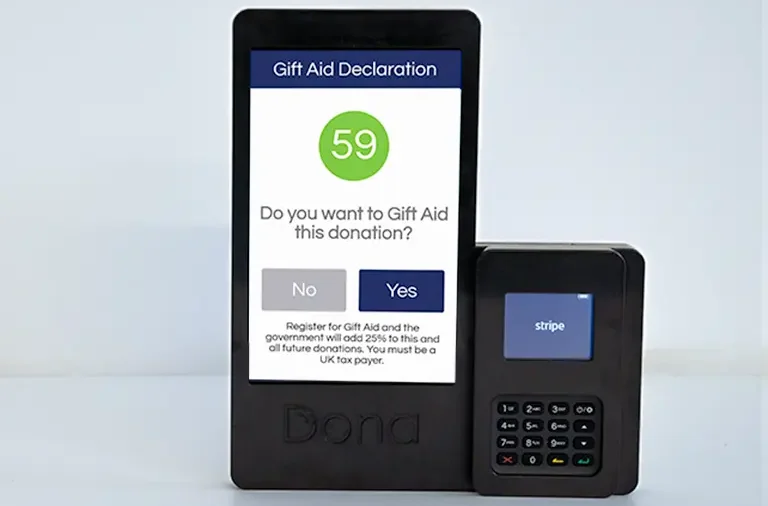
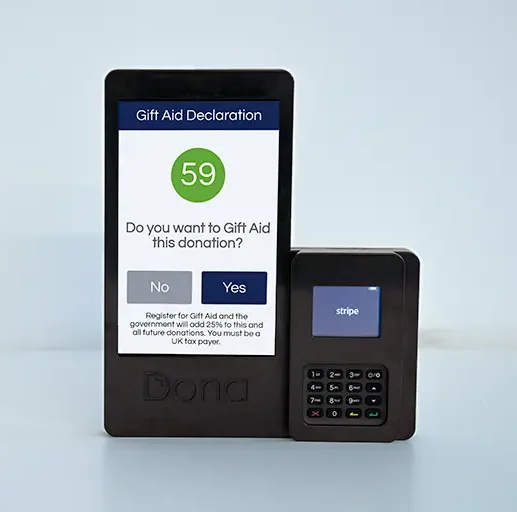
Card payment machine in black with gift aid options

How to Collect Gift Aid and Historic Gift Aid with Dona Donations

Find out more about how to boost the value of your donations by 25%, as well as collecting historic Gift Aid from past donations.


What is Gift Aid? ​

Gift Aid is a scheme created by the UK Government that allows charities to reclaim the tax already paid on donations from UK taxpayers. For every £1 donated, an extra 25p can be claimed by charities from the government, increasing the value of the donation at no extra cost to the donor.

In order for their donations to be eligible for Gift Aid, donors must make a Gift Aid declaration, asserting that they are a UK taxpayer and that they wish for the charity to reclaim the tax back on their charitable contribution.

The UK government introduced Gift Aid back in 1990. At this time, there was a minimum donation limit of £600.  The limit was removed in April 2000, making donations of any size eligible to be Gift Aided and meaning a big boost for smaller charities and community organisations. 

In the tax year to April 2025, HMRC paid charities £1.7 billion in Gift Aid*, up 7% on the previous year. 

*https://www.gov.uk/government/statistics/uk-charity-tax-relief-statistics/uk-charity-tax-relief-statistics-commentary

How a Charity Benefits from Gift Aid

Charities can increase the value of donations from eligible UK taxpayers by 25%. This means that for every £1 donated, a charity can claim an extra 25p from HM Revenue & Customs (HMRC), making a £10 donation worth £12.50. This tax relief significantly boosts a charity’s income at no additional cost to the donor.

How to Collect Gift Aid with Dona Donation Terminals and Online Giving Pages

At Dona, we make it easy for registered charities to collect as much Gift Aid as possible with their Dona devices and online giving pages. Here’s how it works…

  1. Enable Gift Aid: Dona gives charities the option to create up to 20 different campaigns and select which of these to showcase on different Dona donation devices and on the charity’s Dona donation webpage. Gift Aid can be toggled on and off for each campaign.
  2. Register for Gift Aid: If Gift Aid is toggled on, a donor will be asked if they want to add Gift Aid to their donation, and if “Yes” is selected a brief Gift Aid registration form will appear. The Gift Aid registration form asks donors for their first name, last name, house number, post code and email address.
  3. Automatically Add Gift Aid to Future Donations: The next time the donor donates via any of your charity’s Dona donation terminals, or on their online giving page, Gift Aid will automatically be added. Each time they donate, a short email confirmation is sent to the email address with which the donor previously registered, which shares a record, along with details on how to update their Gift Aid preferences if needed.
  4. Claim Back Gift Aid from HMRC: On the Dona Management Portal, the charity fundraising team can download Gift Aid declaration reports in a format that is ready to upload straight to the HMRC website – making claiming back Gift Aid quick, easy and accurate.

What a Charity Needs to Do to Claim Gift Aid

  1. HMRC Recognition: The charity must be recognised as a charity or registered as a Community Amateur Sports Club (CASC) with HMRC for tax purposes.
  2. Gift Aid Declarations: For each eligible donation, the charity must obtain a valid Gift Aid declaration from the donor. This declaration confirms that the donor is a UK taxpayer and has paid enough Income Tax or Capital Gains Tax to cover the Gift Aid amount the charity will claim on their donation. Declarations can be written, online, or verbal. When you fundraise with Dona, we supply you with HMRC-ready reports, so you can complete your Gift Aid declarations more easily.
  3. Register for Charities Online: Charities need to register for HMRC’s Charities Online service to submit their Gift Aid claims electronically.
  4. Compile Donation Records: Meticulous record-keeping is essential. Charities must compile details of all eligible donations, including donor names, addresses, and the amounts donated. The Dona management portal streamlines this process for registered charities by generating the HMRC reports ready for the Gift Aid application, simplifying the administrative burden and ensuring charities can efficiently claim the tax relief they are entitled to.
  5. Submit Claims: Claims are made online via the Charities Online service, typically using a spreadsheet of donations. Dona organisations are able to download HMRC-friendly reports, in a spreadsheet format that is quick and easy to submit to Charities Online.
gift aid writing in red with clear background

How Donors Benefit from Gift Aid

For basic rate (20%) taxpayers, the direct financial benefit of Gift Aid goes to the charity, not the donor. However, donors have the satisfaction of knowing that their donation is amplified, allowing the charity to receive an additional 25% at no extra cost to them.

Higher-rate (40%) or additional-rate (45%) taxpayers can personally benefit by claiming back the difference between the higher rate of tax they pay and the basic rate (20%) that the charity claims. For example, if a higher-rate taxpayer donates £100 (which becomes £125 for the charity with Gift Aid), they can claim back £25 (£125 x 20%) via their Self-Assessment tax return, effectively reducing their own tax liability or increasing their overall donation to the charity.

How to Claim Gift Aid as a Donor

Donors just need to make a Gift Aid declaration to the charity when they donate. By signing or ticking a box, they confirm that they are a UK taxpayer and have paid enough tax to cover the Gift Aid that the charity will reclaim on their donation.

If a donor is a higher-rate or additional-rate taxpayer and wishes to claim the additional tax relief for themselves, they can do so in one of two ways:

  1. Self-Assessment Tax Return: By including their Gift Aid donations in the appropriate section of their annual Self-Assessment tax return.
  2. Contact HMRC: If they do not complete a Self-Assessment return, they can contact HMRC directly to inform them about their charitable donations, and HMRC may adjust their tax code.

What Happens if Someone Completes the Declaration who Shouldn’t Have?

It is the responsibility of each individual donor to read the Gift Aid Terms and Conditions and only complete the declaration if this is applicable for them.

If the donor wants to change or cancel their declaration, they receive an email reminding them to contact the organisation they registered with after every Gift Aid donation they make.

Each time a donor donates through a Dona terminal or online webpage with Gift Aid, they will receive an automated email from Dona Donations to confirm that they have donated to that particular charity, with a reminder to update their preferences if Gift Aid details need to be changed.

Gift aid collection on terminal screen

What is Historic Gift Aid?

Historic Gift Aid refers to the process of claiming Gift Aid retrospectively for donations made in previous tax years. Charities in the UK can claim Gift Aid on eligible donations made by UK taxpayers for up to four years prior to the end of the current accounting period. This allows charities to maximise the value of past donations, provided that a valid Gift Aid declaration is in place and the donor has paid sufficient tax to cover the claim.

  • Historic Gift Aid allows charities to claim Gift Aid retrospectively for past donations.
  • Charities can claim Gift Aid for eligible donations made up to four years prior.
  • Donors must be UK taxpayers and have paid enough tax to cover the claim.
  • The donor completes a Gift Aid declaration, allowing the charity to reclaim tax.
  • Dona makes it easy for charities to collect Historic Gift Aid through the Dona management portal.
  • Dona’s Gift Aid feature now includes Historic Gift Aid by default for new organisations.

Gift Aid Milestones at Dona Donations

  • Between the launch of Dona in 2020 and July 2025, a total of 1,118,743 donations has been Gift Aided through the Dona system with a value of £18,916,484. 
  • This means that as of July 2025, over £4,700,000 has been claimed in Gift Aid through Dona.
  • £5.5 million has been donated to Gift Aid eligible categories but not Gift Aided – about £1.4 million in Gift Aid lost! This shows there needs to be more education for donors and charitable organisations about the Gift Aid opportunity. 
  • Dona has over 291,000 registered GA donors, from the 1.2 million donors who have used Dona.
  • The ability to turn Gift Aid on or off for each donation terminal is essential, as it isn’t always more profitable for a charity to collect the registration from donors. This is particularly true when at a busy event, where allowing donors to register would cause queues, which could be offputting for some donors, who might not wish to wait to make their donation.  
  • On average, 41% of donations are given with Gift Aid across the Dona platform.

Dona offers award winning donation technology and continues to innovate and adapt our hardware and software to be the most efficient and productive at collecting donations and boosting organisations fundraising efforts.

Find out more about Dona’s donation machines, management portal and new AI-driven virtual fundraising assistant.

If you would like to contact us – Please choose your preferred method below or tap our live chat on the bottom right …

Call: 0203 488 5038

Complete our enquiry form 

Message on our social channels:

 Facebook logo for dona donations

 
Categories
Popular

The Power of Contactless: How Charities Can Raise More

The Power of Contactless: How Charities Can Raise More

Black donation terminal with keypad and easy to tap screen

Why going contactless is one effortless way to boost donations.

Nowadays, fewer than 1 in every 5 payments are made with cash in the UK. There has never been a better time to switch to contactless donations for your charity.

The rise in contactless payments in the UK has been phenomenal since Covid 19 with a record 93.4% of all in-store transactions up to £100 being made with a contactless method of payment in 2023*

In 2023 the average person used their contactless payment 231 times with an average spend over
the year of £3,623**

There is no doubt that contactless is now the quickest and most efficient way for most people to
make purchases day to day. The contactless payment limit was raised to £100 in October 2021 and with Dona Donations terminals the most you can donate in one transaction is £9999.99.

Mobile phone wallets have no specific limits. However, it is wise to check as some providers have a general total card spending limit. Find out more here about general mobile transactions.

Contactless payments continue to be a safe way to make payments with a small reduction in the
amount stolen through payment fraud in 2023 according to the UK Finance Annual Fraud Report
2024.

*According to Frontier Economics
**Barclays, 2024

Contactless cards in gold from visa and mastercard

5 key benefits of taking contactless donations with Dona
Donations

1. Take donations with Contactless and Chip & PIN

2. Collect donations without an internet connection

3. Easy-to-use Management Portal featuring Gift Aid declarations and HMRC
reporting 

4. Secure custom stand options

5. Self-service kiosk with a 10-hour battery life

Most charities can benefit from contactless donations including churches, mosques, temples,
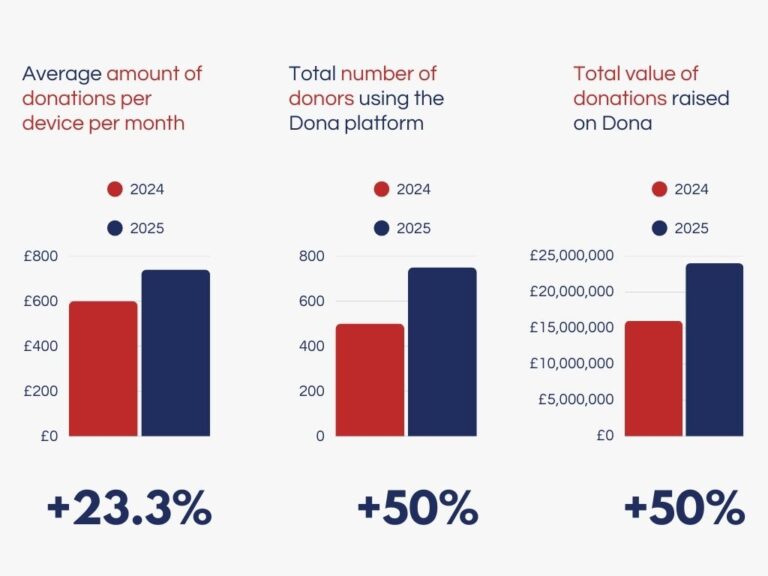
museums, schools, universities, hospices, and food banks. Dona Donations have raised over £25 million for over 2,000 charities thus far.

With 40% of donations Gift Aided, it is the future of fundraising.

Cards accepted include:

  • Mastercard
  • Visa
  • Apple Pay
  • American Express
  • Google Pay
  • Contactless
  • Diners Club
  • Maestro

What does the future of Contactless fundraising look like?

With the use of mobile wallets, digital currencies and banks collaborating to make fintech
advancements at an astonishing rate, we can be sure that tap and go is here for the long run. But
which other areas could we see payments developing into for the future?

Consumer confidence has grown, and card payment is widely accepted as a preferred alternative to cash. With the reduction in risk and the rise in wearable devices, the future of contactless looks likely to grow further with enhanced convenience and accessibility. The technological advancements mean the traceability and reporting now available help to make the running of a charity so much more efficient.

We could see further biometric payments and the need for physical cards decline with some
providers already issuing virtual credit cards. Additionally, QR codes may have finally found their
niche with a huge uptake in the use of this technology for managing business credit card accounts
and taking automatic payments.

Find out more about Dona Donations charity donation plate and how it could help boost your
donations.